

Turning waste heat into power
Where the world sees waste heat, we see work still waiting to happen — one of the largest energy sources on the planet, hiding in plain sight. We are building the engine that turns it into power.
Most of the energy
that industry pays for
is lost as heat.
Industrial waste heat below 300 °C is one of the largest untapped energy sources: worldwide, hundreds of TWh are vented unused every year.
-
In industry, about half of the energy that goes in is lost again — mainly as hot exhaust.
-
Much of this heat is not hot enough for today's equipment to use at a fair cost. So it simply escapes as paid but unused energy.
-
Fairlane turns this lost heat into clean electricity a site can use right away — with no extra fuel.
The largest untapped
fuel on earth.
A new way to harvest lost energy. Recovering even a fraction reshapes the economics of electricity without changing everything again.
-
Cement, steel, chemicals, refineries, non-metallic minerals, cheramics — the most prominent and largest reservoirs of recoverable heat.
-
Deployable across mobile and stationary platforms — marine, land-based, and airborne — the system is projected to raise net electric-power efficiency by up to 20%.
-
Harvesting form drying, evaporation, pasteurization, mostly sub-200 °C.
-
Strongly in drying (100–200 °C), ready for becoming electrical power.
-
Near-silent modules close to demand, minimal transmission losses.
Industry
Cement, steel, chemicals, refineries, non-metallic minerals, cheramics — the most prominent and largest reservoirs of recoverable heat.
Combustion engines
Deployable across mobile and stationary platforms — marine, land-based, and airborne — the system is projected to raise net electric-power efficiency by up to 20%.
Food & beverages
Harvesting form drying, evaporation, pasteurization, mostly sub-200 °C.
Textiles, pulp & paper
Strongly in drying (100–200 °C), ready for becoming electrical power.
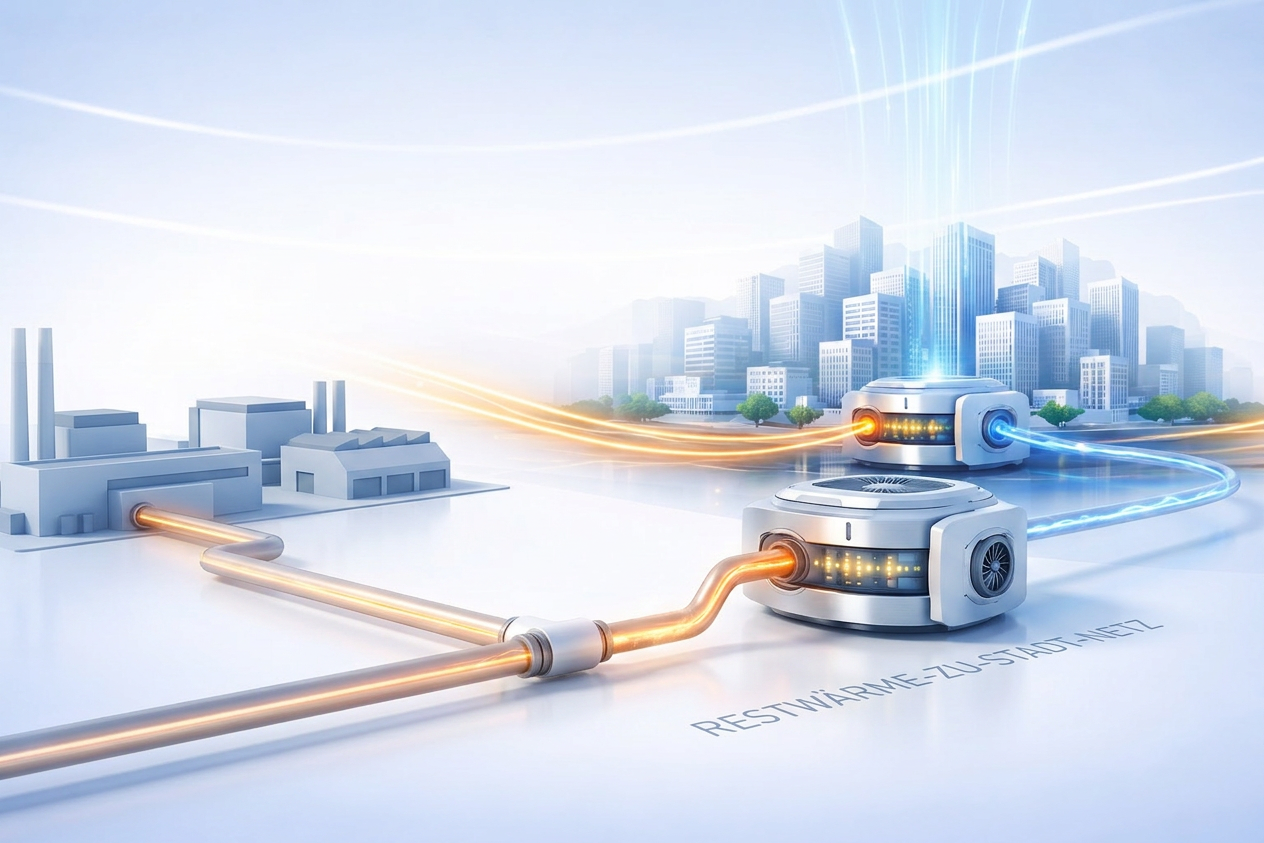
Districts & infrastructures
Near-silent modules close to demand, minimal transmission losses.